
Why Your AI Infrastructure Isn’t as Ready as You Think
Insights from the 2026 State of Data Integrity and AI Readiness report
Executive Summary: What CIOs and Enterprise Architects Need to Know Before Scaling AI
Data Integration:
The Architecture Behind Scalable AI
Enterprise AI initiatives depend on a foundational capability: the ability to move trusted data across systems. For CIOs, that means justifying AI infrastructure investment against an unclear ROI picture. For Enterprise Architects, it means building integration patterns that can scale — without re-platforming everything in two years.
In the 2026 State of Data Integrity and AI Readiness report, 52% of data and analytics leaders say AI is the primary influence on their data programs, accelerating the need for architectures that can support real-time, enterprise-wide data access.
Yet the report reveals a growing disconnect between perceived readiness and operational reality.

of leaders say they have the infrastructure needed to support AI, yet 42% still cite infrastructure as a major challenge. For CIOs, this is the board meeting risk hiding in plain sight: your peers believe they’re ready, but the data says otherwise. “Ready” typically means basic capability — not the enterprise-scale maturity required to move from AI pilots to production. Enterprise Architects will recognize this pattern: infrastructure that works in one silo rarely extends cleanly across a hybrid estate.
Why Do Fragmented Data Ecosystems Block Enterprise AI at Scale?
Most organizations operate across complex environments that span cloud platforms, on-premises systems, and legacy applications. When data is fragmented across these systems, AI initiatives face significant barriers:
- Limited ability to move data in real time
- Operational blind spots across platforms
- Integration complexity and overhead
The report shows that complex data ecosystems (33%) and fragmented data management tools remain (35%) among the top challenges for enterprise data programs, reinforcing how architectural complexity continues to slow AI progress.
Integration Is a Priority for AI Readiness
Organizations increasingly recognize that scalable AI requires unified data architectures. 38% of data leaders identify data integration as a key priority for improving data integrity in 2026. For Enterprise Architects, this signals a convergence moment: integration architecture is no longer a background concern — it is the foundation that determines whether AI initiatives succeed or stall.
Leading organizations are aligning integration strategies with broader data integrity initiatives – connecting architecture decisions with data governance, data quality, and AI readiness efforts.
Modern environments are also increasingly hybrid:
82–85% of organizations preferring cloud/SaaS or hybrid licensing over on-premises deployments for critical data management capabilities.


Unified Data
for Scalable AI
Leading organizations are investing in integration strategies that connect data across enterprise systems and modern platforms. The survey’s top-performing cohort — organizations with both a formal data strategy and active data governance — report 72% high trust in their data, versus 0% for those with neither. The implication for CIOs: governance and integration are not cost centers; they are the infrastructure investment that protects the AI investment.
Key practices include enabling real-time data movement across hybrid environments, and maintaining consistent governance across platforms.
Integration Enables Enterprise-Scale AI
As AI moves from experimentation to production, data architecture becomes a decisive factor in success. Organizations that better positions them to scale AI and deliver measurable business outcomes. The survey shows that organizations investing in data integration consistently report improved data quality (45%) and better data access across systems (44%) — the two capabilities Enterprise Architects need to eliminate integration bottlenecks at scale. For CIOs making the case to the board, these are the infrastructure outcomes that accelerate time-to-value on AI investments.

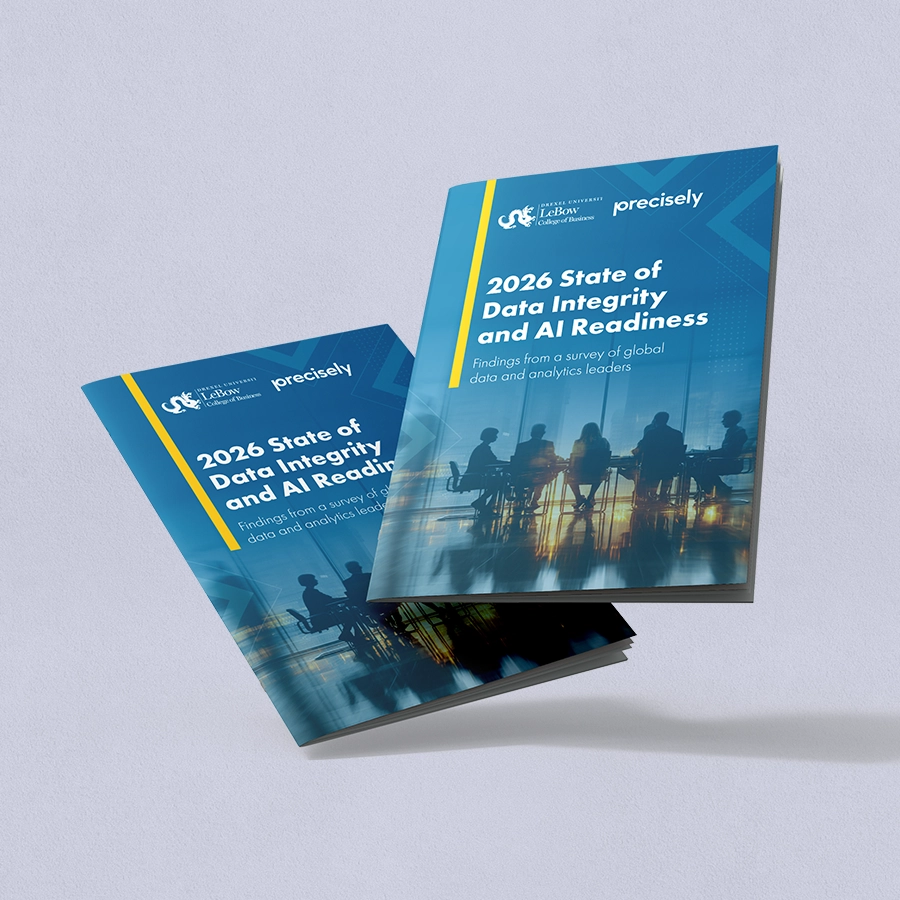
Get the benchmark data behind these findings.
Read the full 2026 State of Data Integrity and AI Readiness report for architecture benchmarks, governance maturity data, and the full confidence-reality analysis across 505 global data leaders.