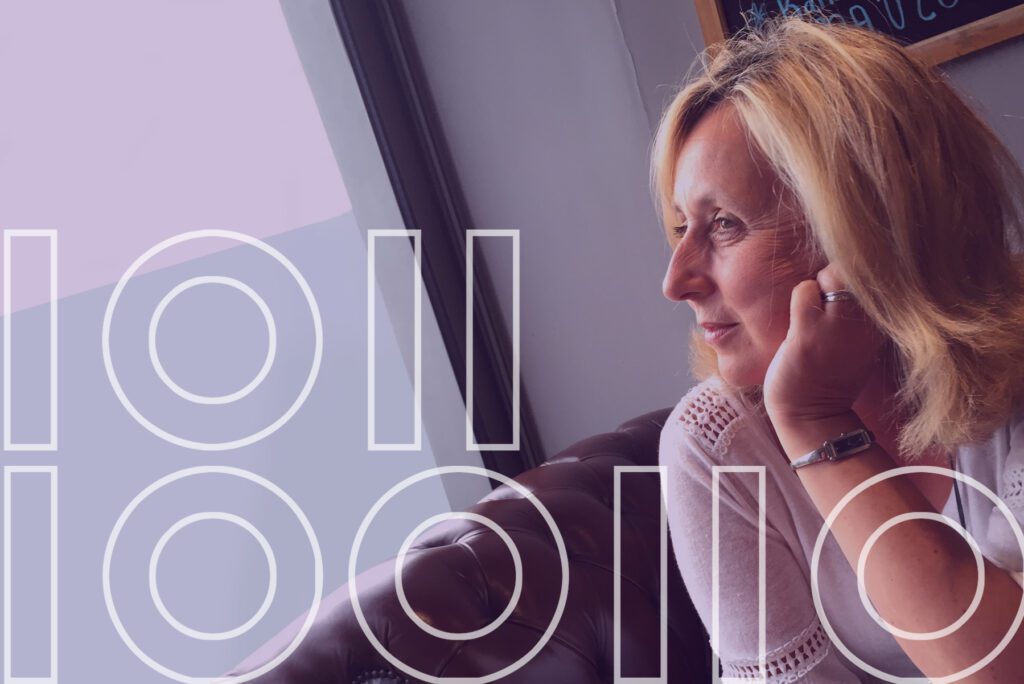


Precisely celebrates the diverse paths, perspectives, and experiences of women across our organization. The Precisely Women in Technology (PWIT) program highlights how curiosity, resilience, mentorship, and a willingness to step outside of comfort zones shape meaningful careers in technology. By sharing these journeys, PWIT aims to foster a supportive community where women feel empowered to grow, lead, and make an impact — while inspiring others to see that there is no single path to success in tech. Continue reading to learn more about Tanha Talavia, Sr. Sales Engineer, and her career in technology.
Why did you choose to pursue a career in technology?
I didn’t go into school thinking I would end up in technology.
Growing up, I was always the person that people came to when something didn’t make sense; whether it was figuring out a process, fixing something that wasn’t working, or explaining things in a simpler way. In college, I noticed the same pattern. I wasn’t necessarily the loudest person in class, but I enjoyed breaking problems down and understanding why something worked the way it did.
There was a point during undergrad when I realized I enjoyed the technical and analytical parts of my coursework more than I expected. I liked working through structured problems, dealing with data, and seeing how small changes could completely change an outcome. Around that time, coding stopped feeling intimidating and started feeling like another way to solve problems. In other words, it was a tool rather than an obstacle.
Over time, that interest turned into a career path. Technology felt like a space where I could keep learning, problem-solving, and building skills that were both challenging and useful. I didn’t choose it because I had a perfect plan; I chose it because it matched how I naturally think and work.
That’s still what keeps me in technology today.
Who has been your greatest professional mentor? What’s one thing you have learned from them?
My greatest professional mentor has been Mayank Kasturia, Principal Solutions Architect at Precisely, who hired me and to-date is still guiding me.
What I’ve learned most from him is how to think beyond the immediate problem and focus on long-term impact. Earlier in my career, I was very execution-driven, eager to deliver quickly and prove myself. Mayank consistently encouraged me to step back and ask deeper questions: Why does this matter? Who does this help? And how will this scale?
I clearly remember times when I hesitated to ask questions, worried they might sound basic or slow things down. Instead of discouraging that curiosity, Mayank created an environment where questions and even mistakes were part of the learning process. He reminded me that growth doesn’t come from having all the answers, but from being willing to ask the right questions and learn along the way.
One moment that really stayed with me was when I brought a solution that technically worked, but he challenged me to rethink it from the customer’s perspective. That shift fundamentally changed how I approach everything today, from solution design to customer conversations. He taught me that strong technical skills may get you started, but clarity of thought, ownership, and the confidence to learn openly are what truly set leaders apart.
Careers and Culture
We help market leaders make better decisions and build new possibilities. Want to join the team? Find out about working with us and our current openings.
What’s the biggest risk you took in your career? What was the reward?
The biggest risk I took in my career was moving out of a purely technical path and into a highly visible, customer-facing role after completing my Master’s in Computer Science.
I’ve always enjoyed explaining complex ideas and breaking problems down for others but doing that in high-stakes customer environments was a different challenge. It meant representing solutions in real time, handling ambiguity, and owning conversations where the expectations and impact were much higher.
There were moments during complex customer engagements and technical proof-of-concepts where it would have been easier to stay quiet or play it safe. But I learned quickly that you rarely feel fully ready for that kind of transition. Growth required stepping into those situations and trusting myself to adapt.
So, I chose to speak up, take ownership, and lean into discomfort. The reward was confidence, not from knowing everything, but from learning quickly, adapting under pressure, and delivering real outcomes.
Those experiences shaped my growth far more than any safe decision ever could. They also helped me earn trust from customers, peers, and leadership, and opened doors I couldn’t have anticipated in my career.
As a woman, what challenges have you faced in the technology industry? How have you overcome them?
One of the biggest challenges I’ve faced as a woman in technology has been learning to trust my voice and not second-guess myself.
I come from a background where women’s opinions were often given less weight than men’s, something I’ve since realized is not limited to one place or culture. That environment subtly teaches you to listen more than you speak, and to question whether your perspective will truly be valued. I carried some of that conditioning with me early on, not because I lacked capability, but because I was still learning to believe that my voice belonged in the room. What helped me overcome that was experience. Stepping into conversations, asking questions, and engaging even when it felt uncomfortable taught me that confidence isn’t something you wait for, it’s something you build through action.
The turning point was realizing that confidence doesn’t come from being perfect. It comes from being prepared, curious, and willing to engage. As I grew, I stopped measuring myself against others and started focusing on impact, solving the right problems, being thoughtful in my approach, and staying calm under pressure.
Over time, I became intentional about building my own presence, one where I knew that when I spoke, it added value. That shift changed everything. It allowed me to show up more authentically and lead conversations with clarity and intent, rather than self-doubt.
What’s the best advice you’ve ever been given? How do you apply it to your personal and professional life?
The best advice I’ve ever been given is: “Clarity is more important than urgency.”
In my professional life, this reminds me to slow down just enough to fully understand the problem before jumping into a solution. Clarity leads to better decisions, stronger communication, and outcomes that scale—especially in complex technical environments.
Personally, this advice has helped me set boundaries and trust my instincts. Not every decision needs to be rushed, and not every moment requires a reaction. Leading with clarity has allowed me to be more intentional, grounded, and confident in how I show up at work and beyond.
What’s one piece of advice you’d offer to younger women entering the industry?
I would tell younger women to trust that they belong even before they fully believe it themselves.
There will be moments early on where you question whether you’re ready, qualified, or confident enough to speak up or take on something new. That uncertainty is more common than it seems, and it doesn’t mean you’re behind. Growth happens by stepping into those moments anyway, learning in real time, and allowing yourself the space to evolve.
Your perspective matters not because it’s perfect, but because it’s yours. Stay curious, ask questions, and don’t be afraid to take up space. Confidence isn’t something you arrive with it’s something you build along the way.
As a successful woman in technology, what’s one thing you do to pay it forward and advocate for other women in the field?
I advocate for other women by being intentional about how I show up, especially in technical and high-stakes conversations.
I speak with clarity, ask questions openly, and create space for thoughtful discussion, because visibility matters. When women see another woman lead with confidence, curiosity, and ownership, it quietly reinforces that they belong in those rooms too.
For me, paying it forward is about setting the tone, showing that growth, and learning. Leadership doesn’t require shrinking yourself. If that presence helps normalize confidence and ambition for others, then it’s making a real impact.
Learn more about us on our Careers and Culture page.