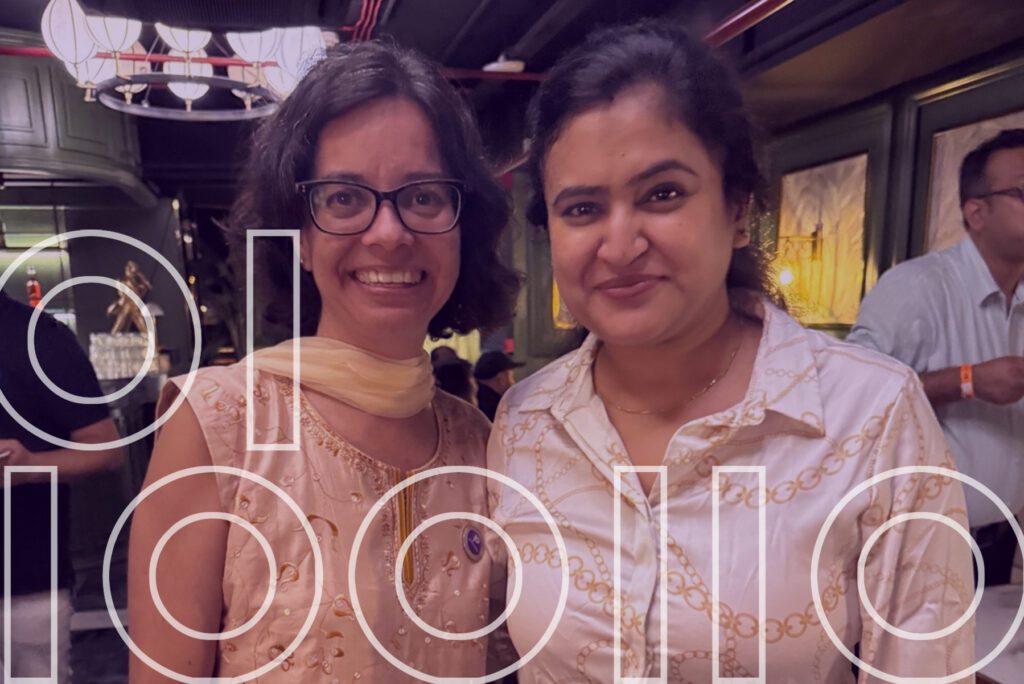

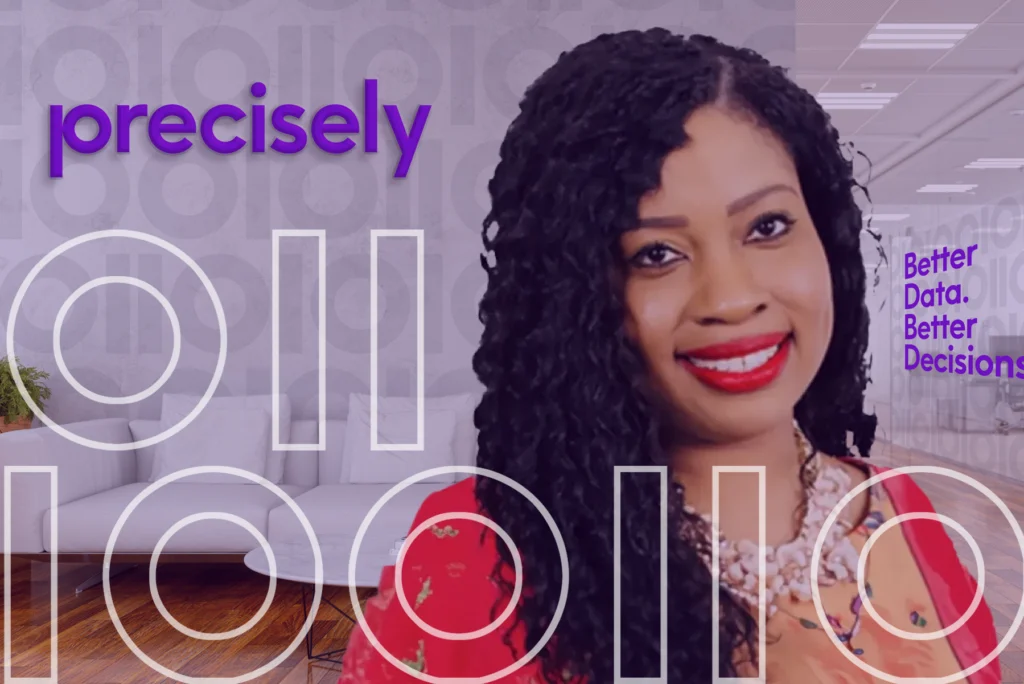
The Precisely Women in Technology (PWIT) program fosters a community where women across the organization can connect, share experiences, and inspire one another. As part of our Women on Wednesday series, we’re proud to spotlight the talented individuals shaping the future of tech at Precisely. This month, we’re featuring Susan Fletcher, Chief Privacy Officer, whose nearly 20-year career spans law, technology, and data. Continue reading to learn more about her journey, what drew her to the industry, and the insights she’s gained along the way.
Why did you choose to pursue a career in technology?
Early in my career, I was drawn to legal issues surrounding information, media, and communication, which gradually brought me closer to the technology sector. As technology became increasingly embedded in everyday life, I became interested in how it was changing how people communicate, access information, and interact. That naturally expanded into how businesses were adapting to digital transformation and the growing role of data in delivering products and services.
My exposure to technology deepened during my time in financial services, particularly through fintech and digital transformation initiatives. After several years practicing law in the sector, I had the opportunity to lead a major program modernizing banking operations through mobile and online channels.
That was my first real experience working directly with product and engineering teams rather than advising from the outside, and I was drawn to the pace, the complexity of the challenges, and being closer to how solutions are built.
That combination of innovation, data, and trust ultimately led me to a career in privacy and technology, where I have worked ever since.
Who has been your greatest professional mentor? What’s one thing you have learned from them?
I’ve been fortunate to learn from a number of strong mentors throughout my career, but one in particular had a lasting influence on how I think about leadership.
The most important lesson I took from them was the value of taking smart risks and not viewing legal as a function that sits alongside the business. Instead, they encouraged a mindset of understanding organizational priorities deeply enough to contribute to decisions as they are forming, rather than simply reviewing them afterwards.
That perspective has shaped how I approach leadership ever since. It has influenced how I engage in complex discussions, how I think about risk, and how I help organizations move forward responsibly while still enabling innovation and growth.
What’s the biggest risk you took in your career? What was the reward?
One of the biggest risks I took in my career was entering banking and financial services as a newly qualified lawyer during the global financial crisis, at a time of significant market instability and heightened regulatory scrutiny.
It was an environment defined by pressure and uncertainty. Expectations were high, change was constant, and decisions often had to be made quickly without complete information.
The risk was stepping into an environment where the learning curve was steep and where judgement had to develop in parallel with responsibility.
The reward was a foundation that has stayed with me throughout my career. It taught me how to remain calm under pressure, how to assess risk in rapidly changing circumstances, and how to make balanced decisions when there is no obvious answer.
Those lessons continue to influence how I lead today.
As a woman, what challenges have you faced in the technology industry? How have you overcome them?
One of the challenges I’ve experienced as a woman working in technology environments is ensuring that my voice is fully heard in fast-moving, engineering-led discussions where decisions are often formed quickly and are highly technical in nature.
Early in my career, I sometimes found myself being one of the few non-engineers — and often one of the few women — in the room. Conversations could move rapidly between product design, technical constraints, and delivery considerations, and I had to be intentional about learning how to contribute in a way that added value alongside technical discussions, particularly around risk, trust, and longer-term impact.
Over time, I became more comfortable contributing a different perspective and focusing on the areas where legal and privacy input can meaningfully shape business outcomes.
Careers and Culture
We help market leaders make better decisions and build new possibilities. Want to join the team? Find out about working with us and our current openings.
What’s the best advice you’ve ever been given? How do you apply it to your personal and professional life?
The best advice I’ve ever been given is not to let perfection become the enemy of progress.
In complex environments, there is often a natural tendency to want every detail resolved before moving forward. However, in practice, particularly in fast-moving areas like technology and privacy, decisions are frequently made with incomplete information.
What I took from this is the importance of balancing rigor with momentum — ensuring that input is thoughtful and well-reasoned, while still being delivered in time to support decision-making.
I still apply it today by focusing on providing commercially pragmatic advice wherever I can, even when the full picture is still evolving.
What’s one piece of advice you’d offer to younger women entering the industry?
One piece of advice I would give is to stay curious and never assume that learning has an end point.
Technology, privacy, and regulations continue to evolve at an extraordinary pace. The people who thrive are often not those who have all the answers, but those who remain adaptable and are willing to keep learning as the landscape changes.
Early in your career, it can be tempting to focus on having the right credentials, the right title, or the perfect plan. But in reality, careers are rarely linear. Some of the most valuable opportunities come from being open to experiences that you may not have anticipated at the outset.
Looking back, many of the opportunities that shaped my own career were not part of a carefully designed roadmap. They came from being willing to learn, adapt, and explore areas outside my immediate comfort zone.
As a successful woman in technology, what’s one thing you do to pay it forward and advocate for other women in the field?
I focus on creating visibility for others, particularly by helping people access opportunities that might otherwise be out of reach.
That includes mentoring and sponsorship but also being intentional about encouraging people to step into new responsibilities and supporting them as they grow into them.
I’ve benefited from others doing that for me throughout my career, often at pivotal moments, and I see it as an important responsibility to do the same for others.
Learn more about us on our Careers and Culture page.