Golf Course Database: Evaluate Real Estate and Proximity to Golf Courses

Golf Courses

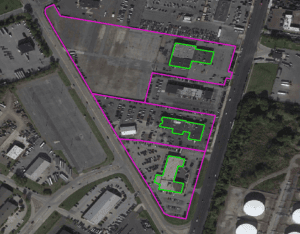
The Golf Courses dataset provides a detailed delineation of the physical extent of public and private golf courses across the United States, including greens, fairways, clubhouses, parking areas, maintenance facilities, outbuildings, and associated residential developments. Developed in partnership with the National Golf Foundation (NGF), this dataset leverages the leading authority on golf course location to deliver the most complete and current spatial dataset.
Robust street-level data for mapping, analysis, routing and geocoding

StreetPro Display

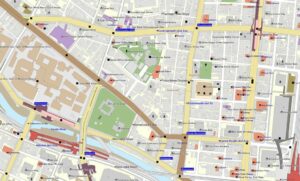
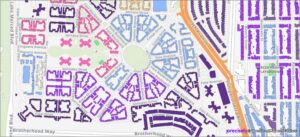
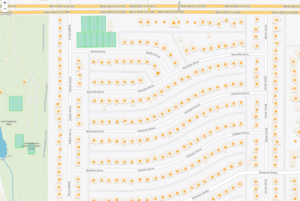
StreetPro Display is a fully attributed vector GIS dataset containing streets, administrative areas, gazetteer, transport, land use, and points of interest data. It is an attributed, interactive dataset for geographic and spatial functions, built using data from geocoding software, and can be delivered with MapInfo Routefinder Networks for desktop geocoding, backdrop mapping, attributes, and context for drivetime and routing analysis. It provides robust street-level data for mapping, analysis, routing, and geocoding.
Buildings USA delivers the building polygon, address, and location intelligence insight

Buildings

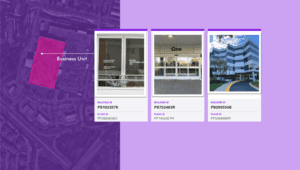
Precisely Buildings provides detailed footprints enriched with characteristics to provide property insights for insurers, telecoms, and location-based analytics. It includes unique identifiers, property essentials (FIPS, census block, address details), building basics (type and usage), location, and elevation (lowest, highest, and centroid). It enables interoperability and enrichment with other features like parcel boundaries and property characteristics, and is available via Data Graph API.
Population Data: Measure the Shift in Population Influx During the Day

Daytime Population

Daytime Population provides estimates of the number of people likely to be within a designated area during normal business hours, based on compiled business data including the number of employees at each business location. These estimates are aggregated to calculate daytime employees, which are then added to the at-home residential population (including retired, in school, or not in the labor force) to arrive at a total daytime population.
GroundView Demographics: Improve Customer Acquisition Rates

GroundView Demographics

GroundView datasets deliver vital socioeconomic information within a geographic context for a deeper understanding of current and potential markets, including household income and consumer spending habits. It provides thousands of variables for insights at the block group level to support intelligence-based marketing, planning, and expansion strategies.
Great School Rating: Student Achievement and College Readiness

Context School Rankings

Context School Rankings provides state-wide school performance rankings, math and reading test scores, historical rankings, and school profiles for a specific geographic area. It offers a comprehensive view of public schools throughout the U.S. with over 80 combined attributes, designed to work seamlessly with public school points and school attendance zones data.
Transportation Data: Commuter Score for Points of Interest

Context Commuter Score

Context Commuter Score provides transportation data which allows users to rate the navigability of an underlying geography. Scores range from 0.0-5.0, with a higher score indicating more commuter opportunities. Biking, driving, and public transit data are all provided and scored.
Precisely Demographics is a robust collection of datasets offering world demographic information, geodemographic data and consumer demographic information

Global Demographics

Global Demographics provides comprehensive coverage of global demographics such as population, age, sex, race, and disposable income as they relate to local administrative and/or postal geographies, extending to 140 countries globally, offering information on 6.7 billion consumers.
Public School Data: Disseminate Information and Manage Logistics

School Grounds

School Grounds provides accurate polygons that define the geographic extent of the campus for public schools across the U.S.
Hospital data: Hospital & medical center boundary dataset (US & Canada)

Hospitals

The Hospitals dataset provides precise polygonal boundaries for general care hospitals with 24-hour emergency services and specialty facilities such as VA and cancer centres across the United States. Each boundary captures the primary hospital campus, including the main building, patient and visitor parking, and, where appropriate, satellite facilities like clinics and administrative offices.
StreetPro 2500

StreetPro 2500

StreetPro 2500 contains map information, including roads and railways, for all of Japan. Detailed building shape outlines are provided for urban areas and their satellite regions, making it possible to determine the precise location of each customer.
College Data and Polygonal Boundaries for First Responders

Colleges

The Colleges dataset provides a series of polygonal boundaries around two-year and four-year colleges and universities in the United States with an enrollment greater than 200, reflecting both main and satellite campuses. Buildings or properties associated with a college are included if adjacent or nearby, but isolated buildings are generally not included. Additional polygons are created for separate facilities with concentrations of students, and some colleges have multiple polygons for geographically dispersed campuses.
Traffic Volume: Support Business-critical Decision-making Processes

StreetPro Traffic

StreetPro Traffic provides information about relative traffic volumes on the StreetPro network, using anonymous feeds from billions of positioning devices within vehicles to offer speed, time, and direction of travel information. It provides aggregate counts of probe devices on road segments, aggregated as annual averages per direction of travel by day of week and hour of day, including additional aggregations for total average weekly, weekday, and weekend probe counts by hour of the day.
Shopping Boundaries: Track Consumer Behavior and Gain Insights

Shopping Boundaries

The Shopping Boundaries delineate geographic boundaries around U.S. shopping locations, focusing primarily on larger metropolitan areas. They include buildings or areas associated with shopping locations and are designed to enclose retail stores, services, restaurants, and parking areas.
Weather Data: Analyze Weather Patterns Across Geographies

Context Weather

Context Weather provides a series of climate scores derived from measuring and modeling climate data over time and across stratified geographies, including average high and low temperatures, precipitation, snowfall, sunny and cloudy days, wind chill, and heat index by month.
Real Estate Data: A Snapshot of Properties Making Up a Neighborhood

Context Real Estate

Context Real Estate consists of two datasets: Context Real Estate Sales, providing quarterly analytics of sales trends, average sales price, mortgage metrics, and other sales metrics derived from public records; and Context Real Estate Inventory, offering a snapshot of neighborhood properties including median tax rate, average year built, property types, and occupancy, also derived from public records.
CrimeIndex Block Group

CrimeIndex & Context CrimeIndex

CrimeIndex measures the likelihood of where crime may occur and provides crime risk scores at the granular block group level. Context Crime Index combines Crime Index and Neighborhood Boundaries to provide a comprehensive view of crime data for a neighborhood or local region.
ExchangeInfo Plus: database of US & Canada telephone exchange system

ExchangeInfo Plus

ExchangeInfo Plus is an essential tool for visualizing and analyzing the telecommunications landscape and associated infrastructure data to support better business decisions. It is a comprehensive database containing key telecommunications infrastructure data for every wire center in the U.S. and Canada, describing the organization of the local telephone exchange system.
EmergencyInfo Pro is a database of police, fire, and emergency medical service (EMS) service areas throughout the U.S.

EmergencyInfo Pro

EmergencyInfo Pro is a compilation of Public Safety Answer Point (PSAP) and Authority Having Jurisdiction (AHJ) agencies throughout the United States, providing a geographic depiction of the EmergencyInfo system. It helps users determine which 911 call center serves emergency calls at a particular location and supplies unique contact information for emergency medical service (EMS), fire, or police agencies. It is a database of police, fire, and EMS service areas in the U.S., essential for understanding public safety infrastructure as mobile phones replace landlines.
Calling Area Info represents the local calling plans available to business and residential customers.

CallingAreaInfo

CallingAreaInfo represents the local calling plans available to business and residential customers when calling from or into a given location. It includes details on number plan areas (NPAs), the first three digits of the phone number after the area code (NXXs), and associated rates. It offers advanced data and geographic visualization capabilities to identify, analyze, and understand local calling plans and rate structures for specific geographic regions.

Place Intelligence Metrics Dataset

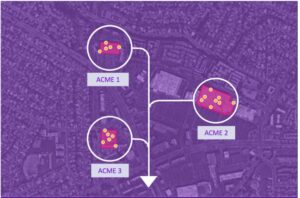
Place Intelligence Metrics is a comprehensive dataset providing location-based metrics for over 8 million points of interest, enabling custom analytic visualizations around visitation trends, consumer demographic attributes, cross-visitation behaviors, and trade area analysis for enhanced decision-making.
Precisely Address Fabric

Address Fabric™

The Address Fabric™ data set is a current and comprehensive list of all known addresses in the United States, Canada, the United Kingdom, Australia, New Zealand and France. Each record is pre-geocoded with precise latitude and longitude, including non-deliverable physical locations, and is delivered in an easy-to-use flat file format for database and analytics integration. Records include street address, coordinate location, census information, property details, and parent/child relationships for primary and secondary addresses. Each record is assigned a unique PreciselyID for data management and enrichment with additional contextual information.
Dynamic Neighborhoods

Dynamic Neighborhoods

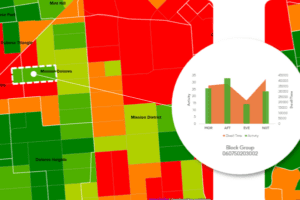
Dynamic Neighborhoods provides a powerful view of how populations move, gather, and engage across communities by combining rich visitation and demographic data. It reveals how busy neighborhoods are, how populations flow through them, and how these dynamics shift across different demographic cohorts and over time. The dataset is analysis-ready with pre-aggregated information at the U.S. census block group level and pre-calculated metrics on activity, dwell time, and location importance.

StreetPro™ Discover

StreetPro™ Discover makes it easy to surface and understand street segment data.  Designed for AI, it transforms street segments into semantically rich, human-readable data objects, which enables you to ask LLMs questions like “Which streets in this suburb have high traffic exposure?” and immediately get the information you need.