Precisely Advances Agentic-Ready Data with a New AI Agent, Data Product Marketplace, and MCP-Enabled APIs Read press release
Build solutions faster with Precisely APIs, pre-linked data, and MCPStart free trial
Privacy Notice Updates: We’ve updated our Privacy Notices to reflect changes to our services, new legal requirements, and the types of personal data we collect. Learn more
Your pipelines are running. But is the data flowing through them ready for AI?
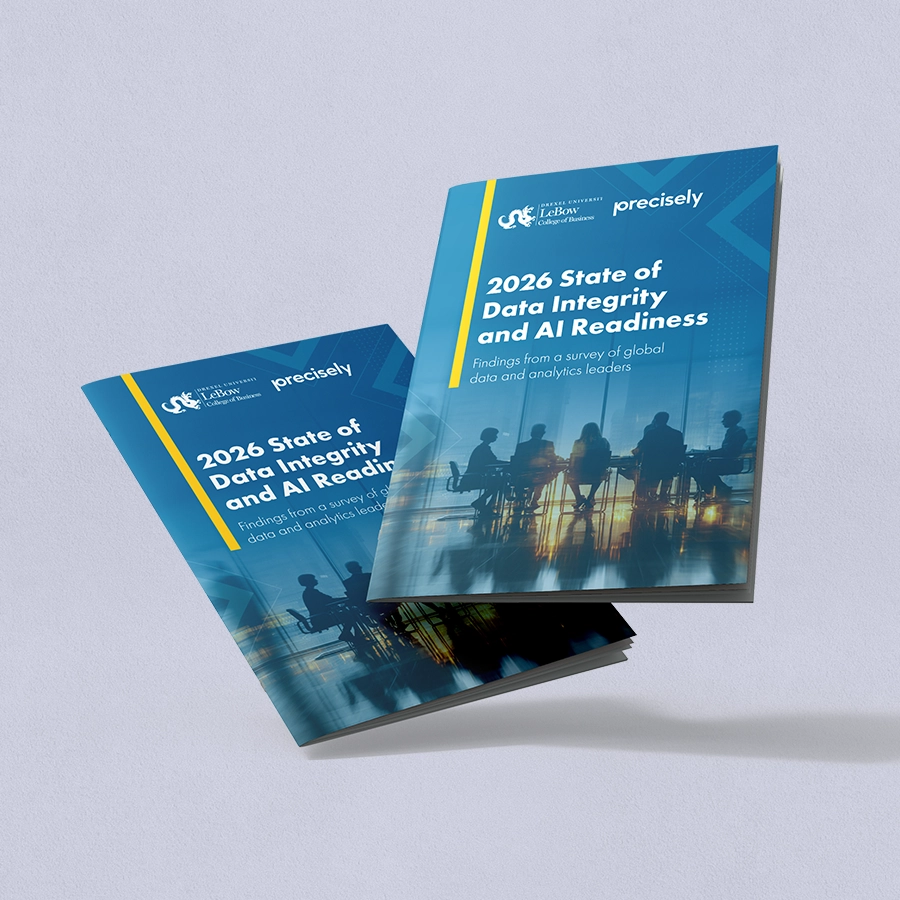
New findings from 500+ global data and analytics leaders reveal where data quality debt is quietly undermining AI outcomes — and what leading data engineering teams are doing differently.
Free report. See how your data quality practices compare to your peers.
THE CHALLENGE AI amplifies poor data quality.
52% of data and analytics leaders say AI is now the primary influence on their data programs. But infrastructure confidence and data readiness aren’t the same thing — and for data engineering teams, that disconnect has a real cost. AI systems amplify the quality of the data they run on. Poor data inputs mean unreliable outputs, rework, and eroded trust in every model downstream.
What the data shows
say they have the infrastructure needed to support AI, yet 42% still cite infrastructure as a top challenge.
0%
say their data is AI-ready, but 43% report data readiness as a major obstacle to aligning AI with business goals.
0%
say their biggest obstacle to high-quality data is simply measuring it — you can’t fix what you can’t see.
0%
KEY INSIGHTThe organizations pulling ahead treat data quality as a pipeline property, not a pre-project checklist.
Leading teams are shifting from reactive cleansing to embedded quality monitoring — with real-time validation during ingestion and automated anomaly detection built into pipelines. That means catching issues before they reach a model, not after it fails.
WHAT’S IN THE REPORTSee where 500+ of your peers stand on data quality and AI pipeline readiness.
Data quality benchmarks across 500+ global organizations
Pipeline readiness findings: what leading engineering teams are building differently
2026 data integrity priority rankings from data and analytics leaders worldwide
How AI adoption is changing the stakes for data quality at scale